
Morocco, a land where ancient traditions blend seamlessly with modern influences, offers a cultural tapestry as vibrant and diverse as its landscapes. From the bustling medinas of Marrakech to the windswept dunes of the Sahara, Moroccan culture is a captivating fusion of Arab, Berber, European, and African elements. Join us as we delve into the heart of Moroccan culture, exploring its history, traditions, arts, cuisine, and the warm hospitality that makes this North African kingdom truly unique.
Historical Foundations: The Roots of Moroccan Culture
To understand Moroccan culture, one must first appreciate its rich historical tapestry, woven over millennia by various civilizations and influences.
Ancient Berber Heritage
- The Berbers, Morocco’s indigenous people, have inhabited the region for thousands of years.
- Berber culture forms the bedrock of Moroccan identity, influencing language, music, and traditions.
- The Amazigh (Berber) new year, Yennayer, is still celebrated in many parts of Morocco.
Arab-Islamic Influence
- The Arab conquest in the 7th century brought Islam to Morocco, profoundly shaping its culture.
- Arabic became the official language, though Berber dialects remain widely spoken.
- Islamic art and architecture flourished, giving rise to Morocco’s distinctive aesthetic.
European Connections
- Morocco’s proximity to Europe led to significant cultural exchanges, particularly with Spain and France.
- The Spanish Reconquista brought an influx of Andalusian Muslims and Jews, enriching Moroccan culture.
- The French Protectorate (1912-1956) left lasting influences on education, administration, and urban planning.
African Roots
- Morocco’s position as a gateway to Africa has resulted in cultural contributions from sub-Saharan regions.
- This influence is particularly evident in music, spiritual practices, and certain culinary traditions.
The Pillars of Moroccan Society
Family and Community
- Family is the cornerstone of Moroccan society, with extended family networks playing a crucial role.
- Respect for elders is paramount, and multiple generations often live together.
- Community bonds are strong, with neighbors often considered extended family.
Religion and Spirituality
- Islam is the state religion and plays a central role in daily life.
- The call to prayer, heard five times a day, structures daily rhythms.
- Sufi traditions and maraboutism (veneration of saints) are important aspects of Moroccan spirituality.
- Morocco also has a history of religious tolerance, with Jewish communities having lived in the country for centuries.
Hospitality (Diyafa)
- Moroccan hospitality is legendary, rooted in both Islamic and Berber traditions.
- Guests are considered a blessing and are often welcomed with mint tea and pastries.
- The phrase “my house is your house” (dari darek) is not just a saying but a lived reality for many Moroccans.
Language: The Voice of Moroccan Culture
Morocco’s linguistic landscape is as diverse as its culture, reflecting its historical influences and regional variations.
Arabic
- Darija, the Moroccan dialect of Arabic, is the most widely spoken language in daily life.
- Modern Standard Arabic is used in formal settings, media, and literature.
Amazigh (Berber) Languages
- Recognized as an official language in 2011, Amazigh has three main dialects in Morocco: Tashelhiyt, Tamazight, and Tarifit.
- Efforts are ongoing to promote Amazigh language and culture, including its teaching in schools.
French
- A legacy of the protectorate era, French remains widely spoken, especially in business and higher education.
Spanish
- Spanish influence is strong in northern Morocco, particularly in cities like Tetouan and Tangier.
Moroccan Arts and Crafts: A Celebration of Creativity
Moroccan artisanal traditions are renowned worldwide, reflecting centuries of refined craftsmanship and artistic expression.
Architecture
- Moroccan architecture is characterized by intricate geometric patterns, colorful mosaics (zellij), and ornate woodwork.
- Key elements include riads (traditional houses with interior gardens), hammams (public baths), and madrasas (Quranic schools).
- The hassan II mosque in Casablanca and the Koutoubia mosque in Marrakech exemplify Moroccan architectural grandeur.
Textiles
- Carpet weaving is an ancient art, with each region having its distinctive styles and motifs.
- The djellaba, a long, loose-fitting outer robe, is a staple of traditional Moroccan clothing.
- Embroidery is highly valued, with cities like Fez and Rabat known for their fine needlework.
Ceramics and Pottery
- Fez blue pottery is world-famous for its intricate designs and vibrant cobalt blue glaze.
- Safi is renowned for its ceramics, often featuring intricate geometric and floral patterns.
Metalwork
- Brass and silver work are important crafts, producing everything from intricate lamps to decorative trays.
- The art of damascening (inlaying gold or silver wire into iron) is still practiced in cities like Meknes.
Leather
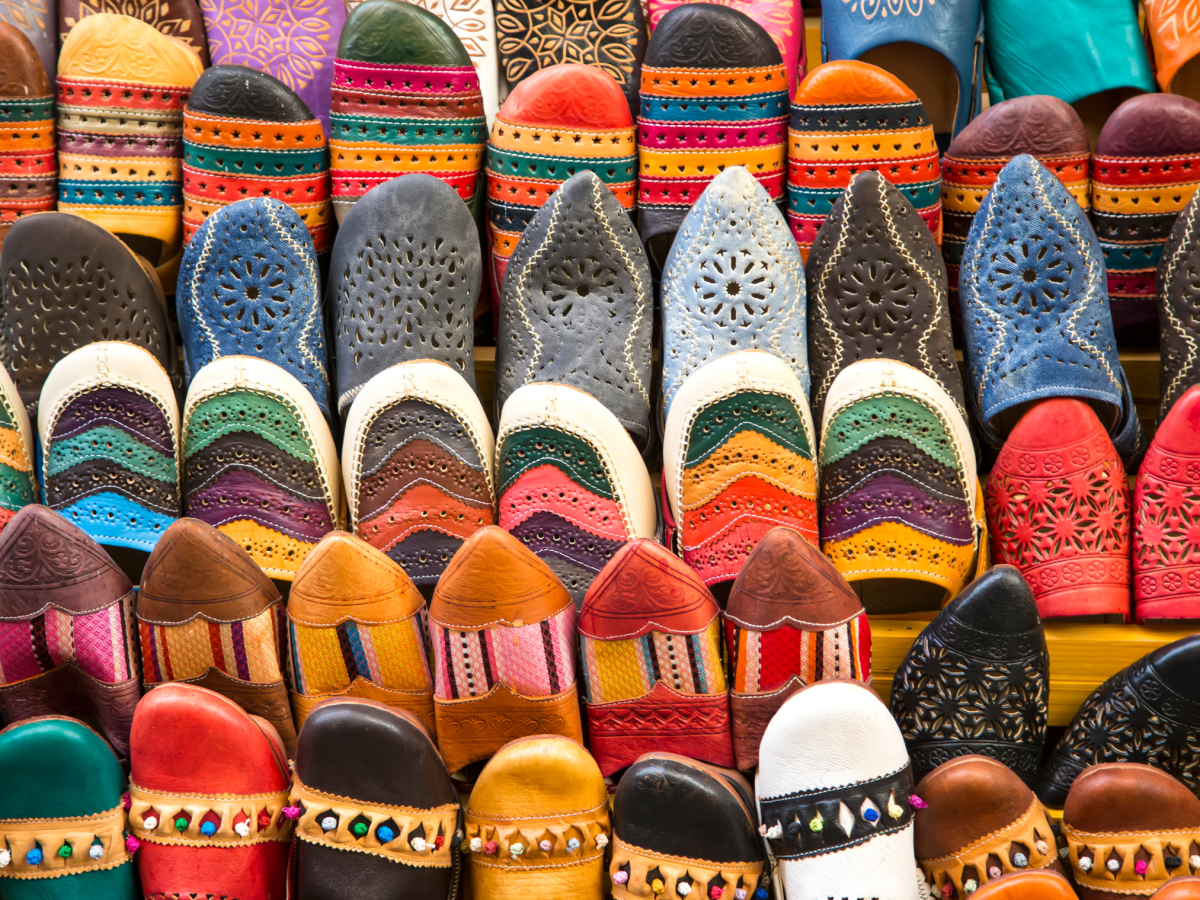
- Tanning and leatherwork have been practiced for centuries, with Fez’s tanneries being a famous (and pungent) tourist attraction.
- Colorful leather goods, from bags to poufs, are popular souvenirs.
Music and Dance: The Rhythm of Moroccan Life
Music is an integral part of Moroccan culture, varying widely across regions and reflecting the country’s diverse heritage.
Gnawa
- A spiritual music with roots in sub-Saharan Africa, often associated with healing rituals.
- The annual Gnaoua World Music Festival in Essaouira celebrates this tradition.
Andalusian Classical Music
- A sophisticated musical tradition tracing its roots to Islamic Spain.
- Still performed in cities like Fez, Tetouan, and Chefchaouen.
Chaabi
- Popular folk music often heard at celebrations and weddings.
- Features percussion-heavy rhythms and call-and-response vocals.
Berber Music
- Varies by region, with distinctive styles in the Rif, Middle Atlas, and Souss regions.
- Often features communal singing and dancing.
Raï
- Originally from neighboring Algeria, this pop-folk fusion has gained popularity in Morocco.
Dance
- Each region has its traditional dances, often performed at festivals and celebrations.
- The Ahwash of the High Atlas and the Guedra of the Sahara are particularly renowned.
Moroccan Cuisine: A Feast for the Senses
Moroccan cuisine is celebrated worldwide for its complex flavors, aromatic spices, and diverse influences.
Key Dishes
- Tagine: A slow-cooked stew named after the conical clay pot it’s prepared in.
- Couscous: Often served on Fridays, it’s considered the national dish.
- Pastilla: A sweet and savory pie traditionally made with pigeon, now often with chicken.
- Harira: A hearty soup often eaten to break the fast during Ramadan.
Spices and Flavors
- Ras el hanout: A complex spice blend that can contain up to 30 different spices.
- Preserved lemons: Used to add a distinctive tangy flavor to many dishes.
- Argan oil: A nutty oil produced in southwestern Morocco, used in both cooking and cosmetics.
Tea Culture
- Mint tea, often called “Moroccan whiskey,” is central to social interactions.
- The art of tea preparation and pouring is a valued skill.
Ramadan Traditions
- The holy month transforms Moroccan culinary habits, with elaborate iftars (fast-breaking meals) bringing families and communities together.
Festivals and Celebrations: Moroccan Culture in Action
Morocco’s calendar is punctuated by a variety of festivals and celebrations, both religious and cultural.
Religious Festivals
- Eid al-Fitr: Marking the end of Ramadan, it’s a time of feasting and family gatherings.
- Eid al-Adha: The Feast of Sacrifice, commemorating Ibrahim’s willingness to sacrifice his son.
- Mawlid: Celebration of the Prophet Muhammad’s birthday.
Cultural Festivals
- Fes Festival of World Sacred Music: Bringing together artists from around the world.
- Tafraoute Almond Blossom Festival: Celebrating the blossoming of almond trees in the Anti-Atlas region.
- Imilchil Marriage Festival: A Berber festival in the High Atlas, originally a matchmaking event.
Moussems
- Traditional festivals often associated with a saint or a local tradition.
- The Moussem of Moulay Idriss II in Fez and the Rose Festival in Kelaat M’Gouna are notable examples.
Contemporary Moroccan Culture: Tradition Meets Modernity
While deeply rooted in tradition, Moroccan culture continues to evolve, embracing modernity while preserving its unique identity.
Arts and Literature
- Contemporary Moroccan literature, in both Arabic and French, has gained international recognition.
- The Marrakech Biennale and the Rabat Biennale showcase contemporary visual arts.
Cinema
- Moroccan cinema has flourished in recent decades, with films like “Marock” and “Much Loved” gaining international acclaim.
- The Marrakech International Film Festival attracts global attention.
Fashion
- Moroccan fashion designers are making waves internationally, blending traditional craftsmanship with modern designs.
- The caftans, traditional formal wear for women, are being reinvented for the global market.
Music
- Fusion genres blending traditional Moroccan music with rock, hip-hop, and electronic music are gaining popularity.
- Festivals like Mawazine in Rabat showcase both local and international talent.
Challenges and Changes
Like all cultures, Moroccan culture faces challenges in the modern world:
- Balancing tradition with modernization and globalization.
- Preserving linguistic diversity in the face of increasing Arabic and French dominance.
- Maintaining traditional crafts in an era of mass production.
- Addressing gender roles and women’s rights within the context of traditional values.
Conclusion: The Enduring Allure of Moroccan Culture
Moroccan culture, with its rich history, diverse influences, and vibrant traditions, continues to captivate both its people and visitors from around the world. It’s a culture that honors its past while embracing the future, where ancient medinas stand alongside modern cities, and where traditional crafts find new expression in contemporary art and design.
The warmth of Moroccan hospitality, the richness of its cuisine, the beauty of its arts and architecture, and the depth of its spiritual traditions all contribute to a cultural experience that is truly unique. Whether sipping mint tea in a quiet riad, haggling in a bustling souk, or watching the sunset over the Sahara, one can’t help but be drawn into the magical world of Moroccan culture.
As Morocco continues to navigate the challenges of the 21st century, its culture remains a source of pride, identity, and inspiration. It’s a living, breathing entity that continues to evolve while remaining true to its roots – a testament to the enduring spirit of the Moroccan people and their rich cultural heritage.


Comment (0)